San Juan de Gaztelugatxe Tour and Basque Coast Walk
A group of eight walking the coast path and the steps, which is how you photograph the islet from the angles the camera used.
From $81 per person
Check AvailabilityThe staircase you have seen on screen is real and you can climb it. The fortress at the top is not, and never was.
Hours, prices and access verified by the Gaztelugatxe Tours team — last checked 18 August 2026.
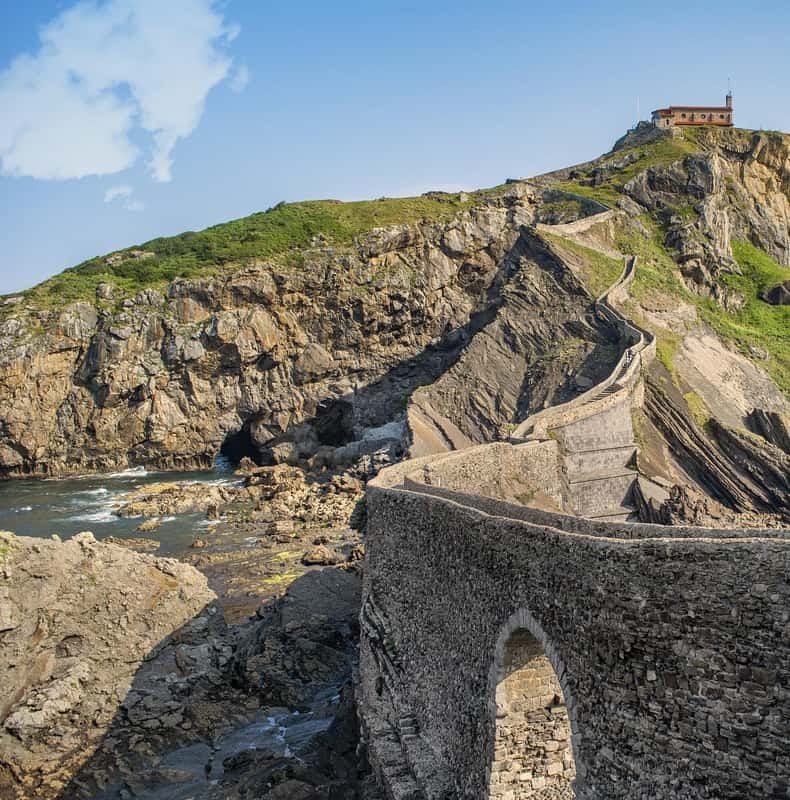
The production filmed here in 2016 and the episodes aired in 2017. What the camera used was the approach: the causeway, the bridge and the zig-zag staircase, shot from above and from the water. The stronghold on the summit was added afterwards. What stands there is a small stone hermitage, and it is worth the climb on its own.
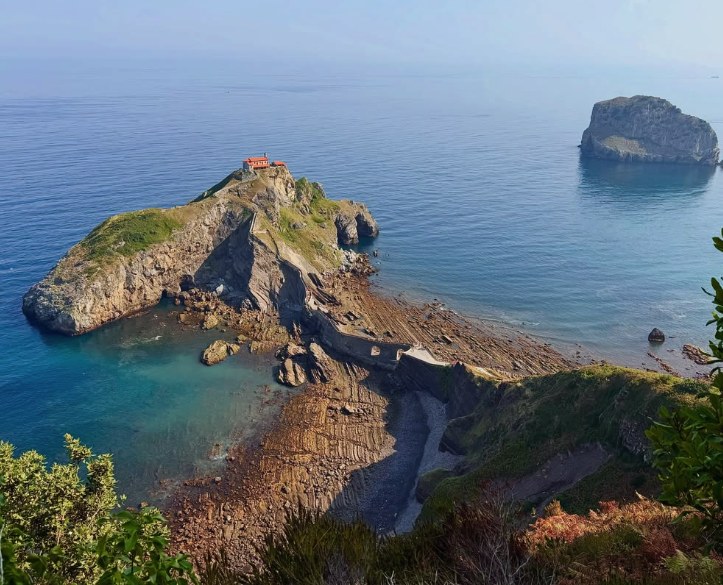
The islet stood in for the approach to an island stronghold. The shots that made it famous are the wide ones: the rock rising out of the water, the causeway reaching towards it, and the staircase folding back on itself up the spine of the hill. The Basque Government's tourism board keeps its own record of the productions filmed in the region, and Gaztelugatxe is the headline entry.
Gaztelugatxe Tours exists partly because of what happened next. Filming took place in 2016 and the episodes aired the following year, in the seventh season. The sequence is the one where the exiled queen comes ashore and walks up to the seat of her family, so the staircase is not a background: it is the whole point of the shot. That is why the place reads as familiar the moment you reach the bridge.
Filmed: 2016.
Aired: season seven, 2017.
The shot: the arrival, the causeway, and the climb.
On the ground: all of it is walkable, in the order the camera took it.
Two things on screen are not there. The fortress on the summit was built in post production, and the beach at the foot was borrowed from elsewhere on the coast. Everything between them is real: the bridge, the arch cut through the rock, the switchbacks, the handrails, the drop.
Better than the screen version, is the honest answer, and the coast running east towards Bermeo is a part of it the camera never used. On film the rock is graded cold and grey. In life the water runs green over the shelf, the cliffs are striped and folded, and there is a sea arch off to the right that the camera never used. The staircase is narrower than it looks and the wind is louder.
From the ridge: the whole islet in one frame, the classic view.
From the bridge: the staircase stacked above you, best in morning light.
Halfway up: the causeway behind, and the coast running east.
At the door: the bell, the plaque, and the open sea.
The same production worked elsewhere along this coast. Itzurun beach at Zumaia, with its stacked rock strata, took the beach landing that the summit shots are cut against. Muriola beach at Barrika, west of Bilbao, was used for another stretch of shoreline. Neither is on the standard day trip, and both are an easy drive if you are staying on for a second day.
The first slot of the day is the answer to almost every complaint about this place. The bridge is quiet, the light comes across the rock rather than down onto it, and you climb before the heat. Guided trips that leave Bilbao early arrive inside their booked slot at exactly that hour, which is the practical reason most photographers on the steps at nine in the morning came on a coach.
Before you go: the permit and the staircase are covered on the access and climb page, and the wider coast on things to do. If the screen history is what brought you here, San Juan de Gaztelugatxe tour options that guarantee island access are the ones to look at — all the Gaztelugatxe tours list what they include.
Chosen for the ones that reach the hermitage rather than stopping at the viewpoint.
A group of eight walking the coast path and the steps, which is how you photograph the islet from the angles the camera used.
From $81 per person
Check Availability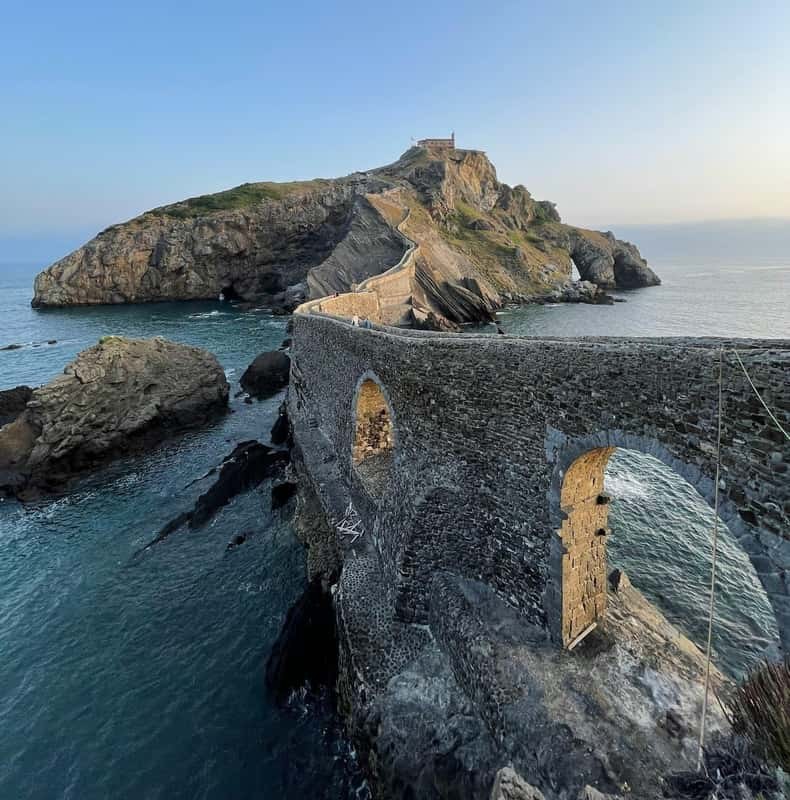
An early start from Bilbao and guaranteed access to the hermitage grounds, then the coast the production drove between locations.
From $79 per person
Check Availability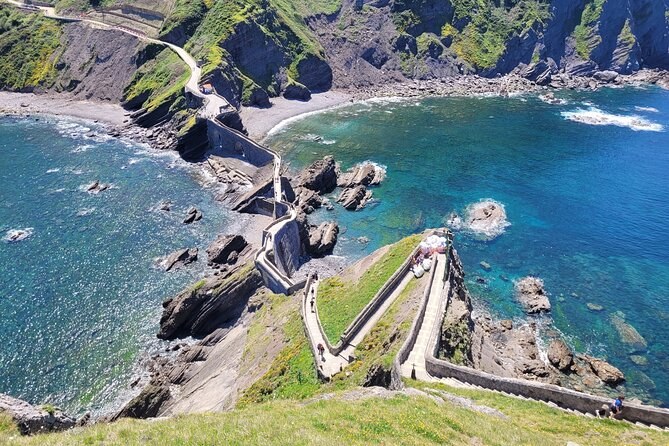
A group capped at seven, on the steps early enough to have them almost to yourselves.
From $159 per person
Check Availability