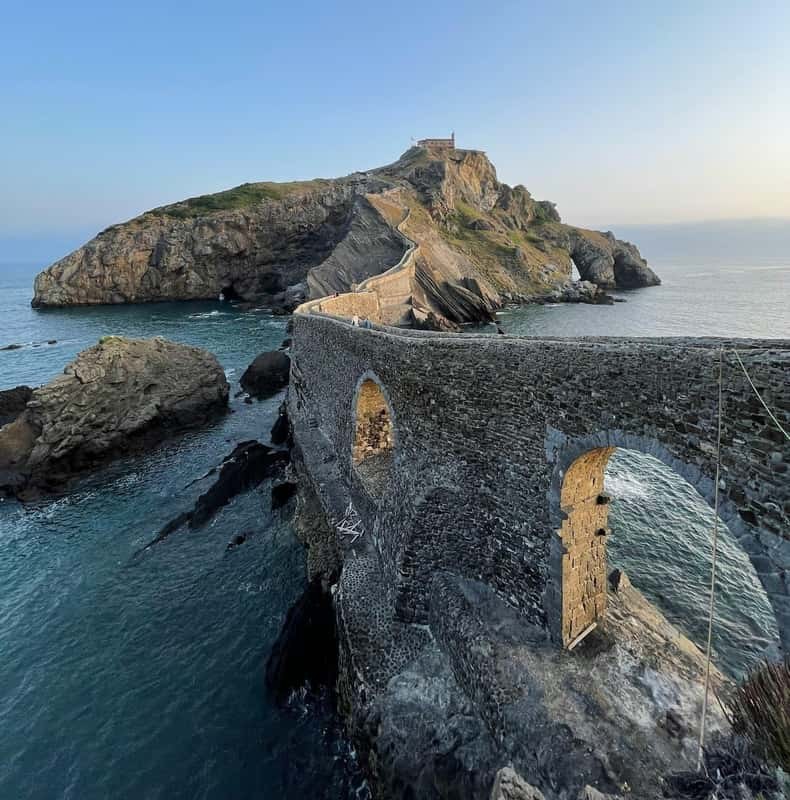
Gaztelugatxe, Bermeo, Mundaka and Gernika Wine Tour from Bilbao
Bermeo, Mundaka and Gernika in one run, with two hours on the islet and a txakoli tasting on the Bakio slopes to finish.
From $79 per person
Check AvailabilityThe islet is the reason you came. The coast road either side of it is why most people end up giving the whole day to Bizkaia.
Hours, prices and access verified by the Gaztelugatxe Tours team — last checked 18 August 2026.
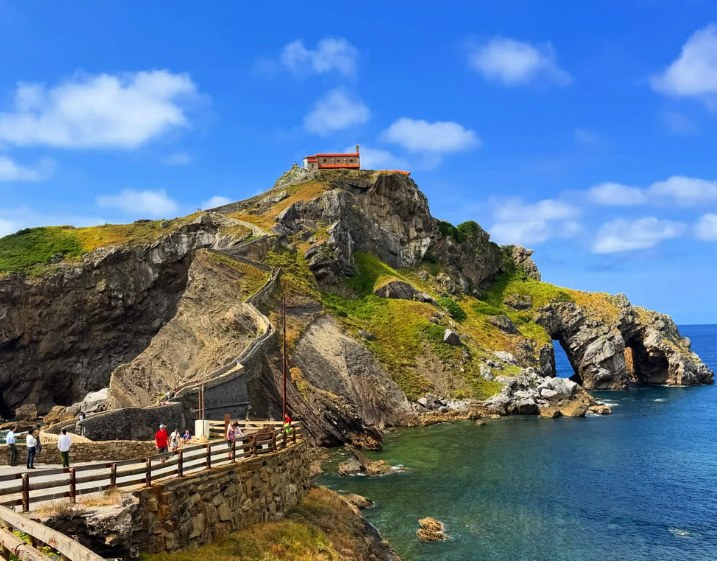
What it is: a rock joined to the mainland by a stone bridge and a
staircase, with a hermitage to St John the Baptist on the summit.
Time to allow: 90 minutes to two hours from roadside to roadside.
The moment: the top of the steps, where the coast opens out both ways.
Everything about this place is the approach, which is why Gaztelugatxe Tours groups the coast into one day rather than a single stop. You see it whole from the ridge, lose it behind the shoulder of the hill, then meet it again at the bridge with the staircase stacked above you. At the door, ring the bell three times — the custom is older than the crowds and it is still the thing people remember.
What it is: a harbour town of stacked coloured houses, ten minutes
east along the coast, and a fleet that still goes out.
Time to allow: 30 to 45 minutes on a guided stop.
The moment: the inner harbour, where the boats sit below the terraces.
Bermeo is not a museum town. Nets are stacked on the quay, the fish market runs, and the cafes fill with people who worked that morning. It is the honest counterpart to the headland, and most coach days stop here because it is ten minutes away and completely different in character.
What it is: a small seafaring town at the mouth of the estuary, known
worldwide among surfers for a long left-breaking wave.
Time to allow: an hour or more, usually with free time for lunch.
The moment: the church terrace above the harbour, looking down the bar.
Mundaka is where the sandbar at the river mouth makes a wave that draws people from other continents. On a flat day it is simply a very pretty town with good food. Trips that stop here tend to leave free time, which makes it the natural lunch stop of the loop.
What it is: the symbolic seat of Basque self-government, and the town
bombed in 1937 that gave Picasso's painting its name.
Time to allow: 45 minutes to three hours, depending on the trip.
The moment: standing under the Tree of Gernika at the Assembly House.
Guided stops here take in the Assembly House with its oak, and the tiled reproduction of the painting on a wall in the town. It is the part of the day that changes register: the coast is spectacular, and Gernika is the reason a guide is worth having.
What it is: the wide sand bay immediately west, with vineyards on the
hills behind it.
Time to allow: a photo stop on most trips, a half day on your own.
The moment: the first view of the headland from the Bakio road.
Txakoli is the sharp, faintly sparkling white made on these slopes, poured from a height and drunk young. Several trips finish at a hillside winery for a tasting, which is a much better ending to a walking day than a motorway service station.
What it is: the protected estuary behind Mundaka and Bermeo, recognised
as a biosphere reserve, with marsh, dune and oak woodland.
Time to allow: it frames the whole eastern half of the drive.
The moment: the estuary opening out below the road on the way to Gernika.
You do not visit Urdaibai so much as travel through it. Knowing that the water on your right is a reserve rather than a bay changes how the drive reads, and it is the thread that ties Bermeo, Mundaka and Gernika into one landscape rather than three stops.
Plan around it: the climb itself is covered on the access and climb page, the numbers on the facts page, and the screen history on the Dragonstone page. Most of this coast is a single day out of Bilbao — see how Gaztelugatxe tour from Bilbao operators build the loop, or compare every Gaztelugatxe tour side by side.
Each of these builds the day around a different pairing of stops.
Bermeo, Mundaka and Gernika in one run, with two hours on the islet and a txakoli tasting on the Bakio slopes to finish.
From $79 per person
Check Availability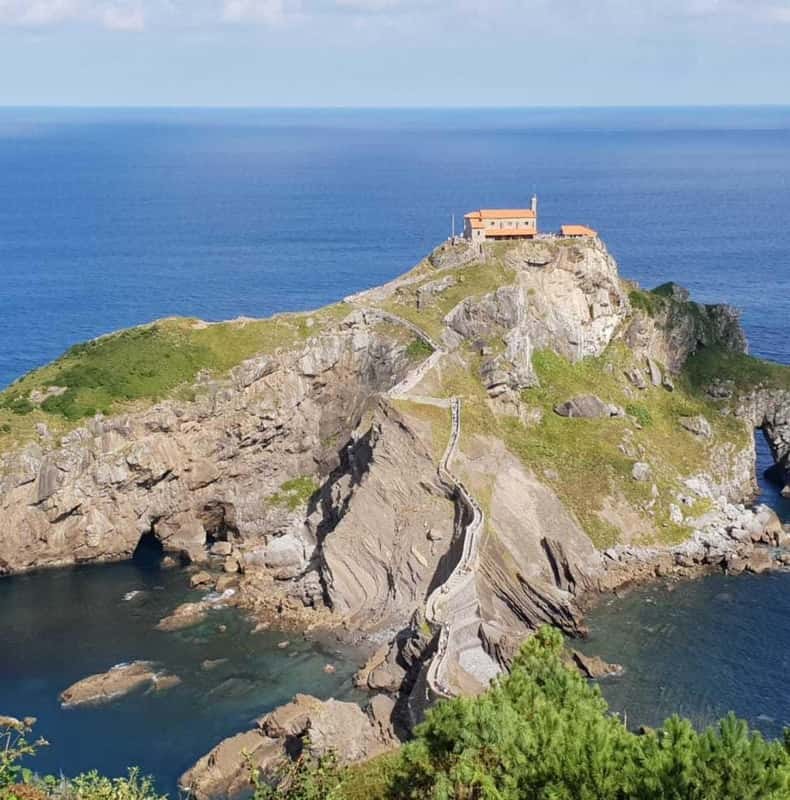
Mundaka and Gernika with two full hours on the islet, and back in Bilbao for the afternoon.
From $97 per person
Check Availability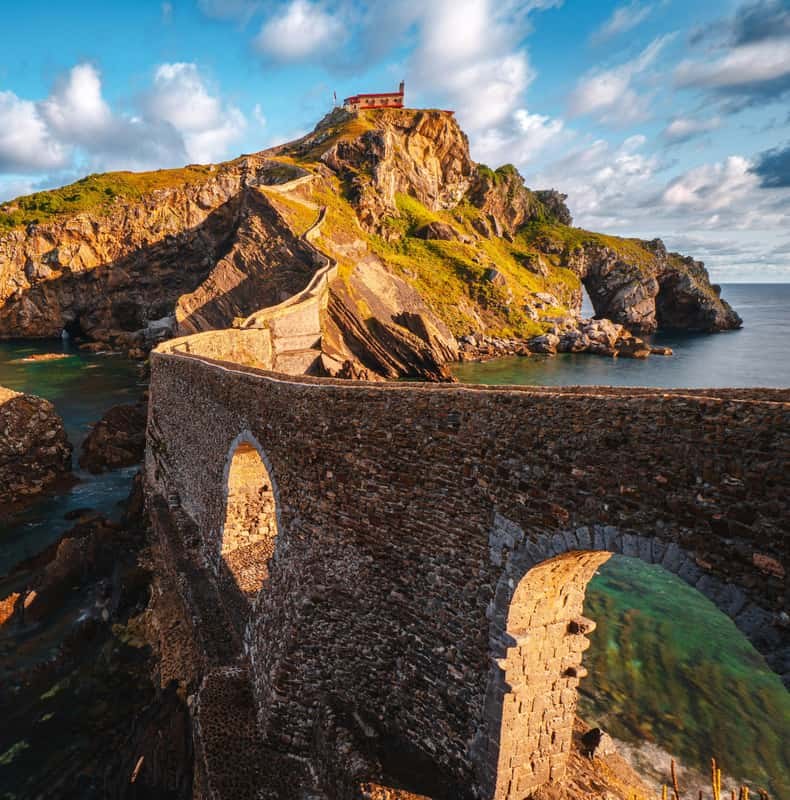
Bermeo and Gernika at a slower pace, with the longest stretch of unguided time on the headland.
From $81 per person
Check Availability