The short answer
Gaztelugatxe is older, stranger and more local than its screen fame suggests. The name means castle rock in Basque, the chapel has been a convent and has burned more than once, and the bell you ring at the top has been rung for luck for centuries. The fortress everyone recognises was never there at all.
1. The name has nothing to do with a saint
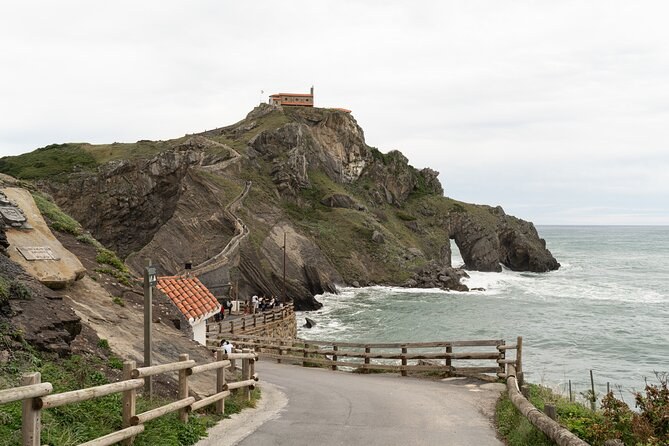
Gaztelugatxe joins two Basque words, gaztelu and aitz, and comes out as castle rock. It describes the shape of the crag, not the chapel on it. San Juan came later, and Basque signage still uses Done Joane for the same saint, which is why the waymarkers can look like they are pointing at two different places.
2. It was a convent before it was anything else
The Basque Government's tourism board records a first hermitage believed to have been raised in the 9th century, and the site becoming a convent in the 12th. Two centuries after that the friars left, taking the valuables with them. Everything since has been rebuilding work.
3. The building has burned down more than once
Fires and battles forced the church to be rebuilt on several occasions. What stands today is small, plain and rebuilt — which is the honest reason it looks nothing like the stronghold people arrive expecting.
4. Ringing the bell three times is an official tradition
Not a tourist invention: the regional tourism board publishes it. Three rings, for good fortune and to drive off bad spirits. It is unusual for a folk custom to be recorded that plainly by an official source, and it has survived every rebuilding of the chapel.
5. Entry is free, and always has been
The timed permit that people book online costs nothing. It exists to cap the number of people on the headland each day, not to raise money. That makes Gaztelugatxe one of the very few world-famous attractions where the only thing standing between you and the summit is a free reservation and a staircase.
6. The step count is exact, and it is 241
| Figure | Value |
|---|---|
| Steps to the hermitage | 241 |
| Path from the roadside | 1.1 km, signed at 25 minutes |
| Time on the steps | 20 to 30 minutes with stops |
| Round trip | 90 minutes to 2 hours |
People do miscount it on the way up, and one review on a booking listing insists on 242. The published figure is 241, and the facts page keeps the rest of the numbers together.
7. It is not an island
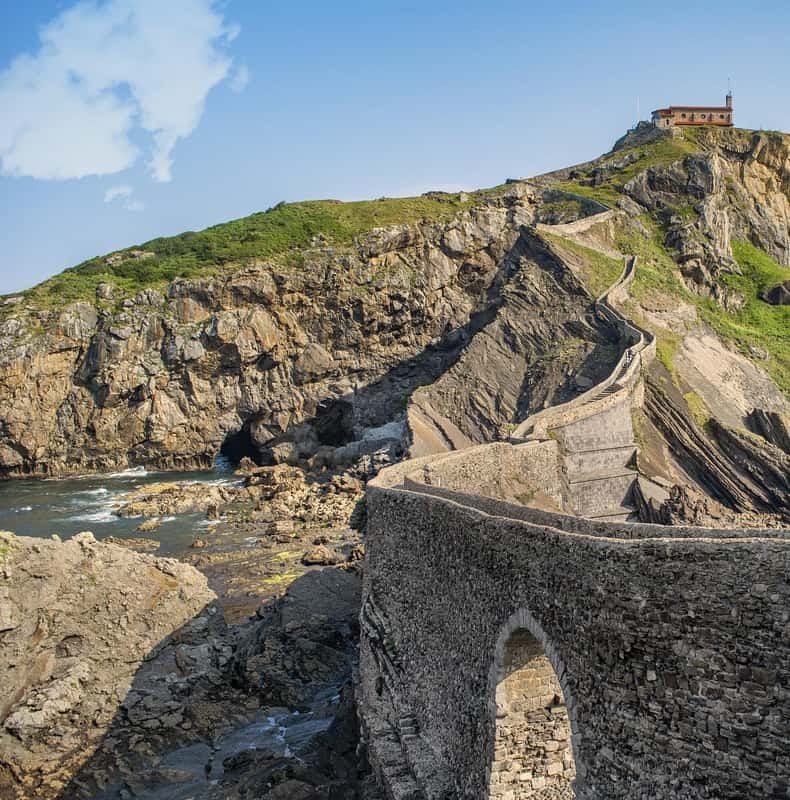
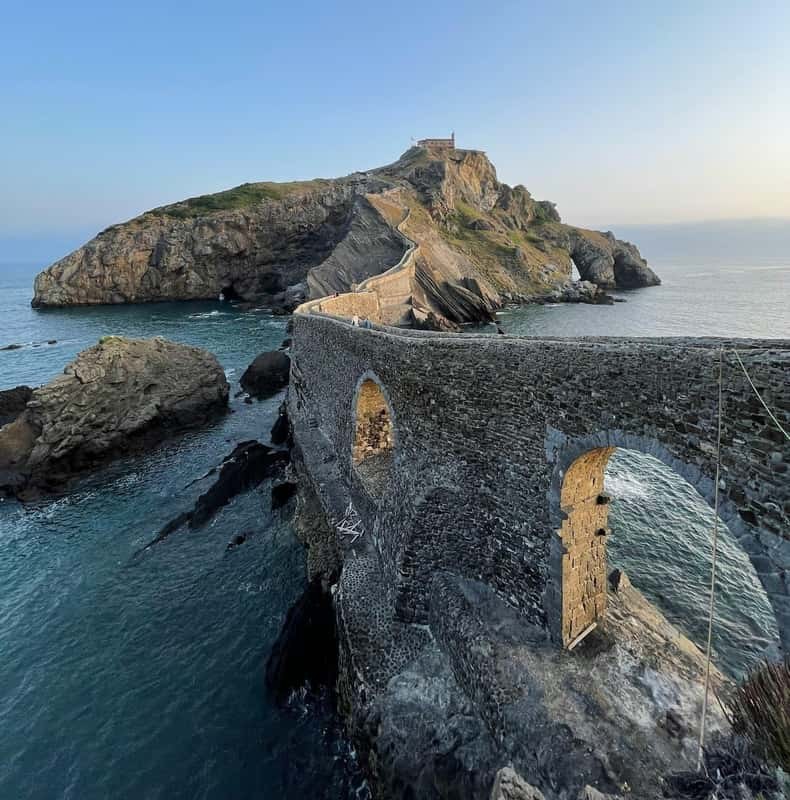
Strictly it is a tied islet, joined to the mainland by a natural rock causeway that the stone bridge follows. That is why you can walk across without a boat, and why the water on either side of the bridge is shallow enough to change colour with the light. Calling it an island is close enough for conversation and wrong on a map.
8. The coast around it is a biosphere reserve
The estuary behind Bermeo and Mundaka is protected, taking in marsh, dune and oak woodland. Guided days drive through it on the way to Gernika without always mentioning it. Knowing that the water on your right is a reserve rather than a bay changes how the whole drive reads — the things to do page puts each stop in context.
9. Locals were coming here long before television was
The chapel has been a place of pilgrimage, of weddings and of small private rituals for generations. Guides on the small-group walks tend to have a family connection to the place, and one of them will tell you their parents were married in the chapel at the top. That is the part the screen fame did not create and cannot take away.
The tide and the water below the bridge
Look over the parapet on the way across. The water on the sheltered side is shallow and runs green over a shelf of folded rock, while the seaward side drops away and turns navy within a few metres. On a calm day the difference between the two is startling; on a rough one the seaward side is where the noise comes from.
That folded, near-vertical rock is the reason this stretch of the Bizkaia coast looks unlike anywhere else, and it is what makes the photographs seem retouched when they are not.
The sea arch nobody photographs
Standing on the bridge and looking right, there is an arch cut clean through the cliff by the sea. It is large enough to take a small boat, it appears in almost no publicity images, and it is one of the better reasons to look sideways rather than up on the way across.
Why the crowds arrive at eleven
Not by accident. Coaches leaving Bilbao at nine reach the ridge at around ten, and independent visitors driving out after breakfast arrive at much the same time. That produces a queue of cars on the approach road and two-way traffic on a narrow staircase for the rest of the morning.
The trips that get ahead of it leave early and go straight to the headland before any other stop. Reviewers who took one describe an empty staircase; reviewers who arrived later describe the queue. It is the clearest, most repeatable piece of advice about this place, and the visiting guide builds the rest of the day around it.
The plaque most people walk past
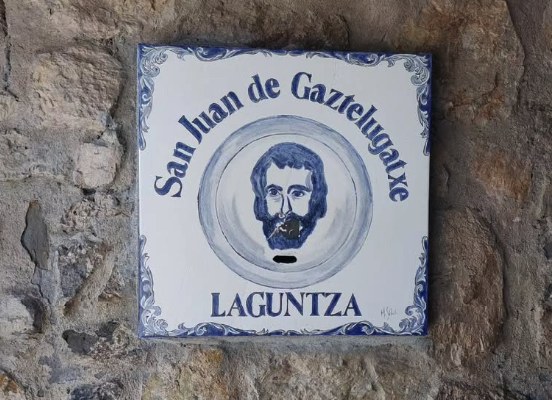
Set into the wall beside the chapel door is a hand-painted ceramic tile. It carries the head of St John the Baptist on a platter, the words San Juan de Gaztelugatxe, and beneath them Laguntza — Basque for help, or aid. It is small, it is easy to miss with the view behind you, and it says more about what this place has meant locally than the staircase does.
Traditions like this one are the reason a guide is worth having on the way up. The bell, the plaque and the dedication all connect, and none of it is written on a sign. The gallery has a photograph of the tile.
Where to see all of this for yourself
The facts above are best collected on foot, in that order, on the way up. A guided walk gets you the natural history and the local stories that no sign on the path carries; the visiting guide covers the practical side and the access page the permit. If the screen history is the hook, the full visitor guide puts the whole day together.